|
|
 |
|
|
|
What You Should Know About Water: |
|
Water is an incredibly important aspect of our daily lives. Every day we drink water, cook with water, bath in water, and participate in many other activities involving water. However, even with all of the importance water holds in our lives, many of us know very little about the water we use each day. We drink tap water, enjoying the convenience and cost-effectiveness of this practice, yet, we fail to recognize the serious threat this water may pose to our health. Those who are willing to forgo the convenience of tap water and indulge in bottled water often know very little about the contents of that water and simply trust that bottled water must be better than tap water. Even conscientious consumers, who wisely attempt to treat their own water in an effort to ensure the healthfulness of that water, often know little about the many home water treatment options now available. Water is a common chemical substance that is essential to all known forms of life. |
| Chemical and Physical Properties: |
|
|
Water is the chemical substance with chemical formula H2O: one molecule of water has two hydrogen atoms covalently bonded to a single oxygen atom. Water is a tasteless, odorless liquid at ambient temperature and pressure, and appears colorless in small quantities, although it has its own intrinsic very light blue hue. Ice also appears colorless, and water vapor is essentially invisible as a gas. |
Also the elements surrounding oxygen in the periodic table, nitrogen, fluorine, phosphorus, sulfur and chlorine, all combine with hydrogen to produce gases under standard conditions. Oxygen attracts electrons much more strongly than hydrogen, resulting in a net positive charge on the hydrogen atoms, and a net negative charge on the oxygen atom. The presence of a charge on each of these atoms gives each water molecule a net dipole moment. Electrical attraction between water molecules due to this dipole pulls individual molecules closer together, making it more difficult to separate the molecules and therefore raising the boiling point. This attraction is known as hydrogen bonding.
|
|
What Is Water Purification? |
 |
Water purification is the process of removing contaminants from a raw water source. The goal is to produce water for a specific purpose with a treatment profile designed to limit the inclusion of specific materials; most water is purified for human consumption (drinking water). Water purification may also be designed for a variety of other purposes, including to meet the requirements of medical, pharmacology, chemical and industrial applications. Methods include, but are not limited to: ultraviolet light, filtration, water softening, reverse osmosis, ultrafiltration, molecular stripping, deionization, and carbon treatment. |
Water purification generally means freeing water from any kind of impurity it contains, such as contaminants or microorganisms. Water purification is not a very one-sided process; the purification process contains many steps. The steps that need to be progressed depend on the kind of impurities that are found in the water. This can differ very much for different types of water.
Water purification may remove: particulate sand; suspended particles of organic materal; Parasites, Giardia; Cryptosporidium; bacteria; algae; virus; fungi; etc. Minerals calcium, silica, magnesium, etc., and Toxic metals lead; copper; chromium; etc. Some purification may be elective in the purification process, including smell ( hydrogen sulphide remediation), taste (mineral extraction), and appearance ( iron encapsulation).
Governments usually dictate the standards for drinking water quality. These standards will require minimum / maximum set points of contaminants and the inclusion of control elements that produce potable drinking water. Quality standards in many countries require specific amounts of disinfectant (such as chlorine) in the water after it leaves the WTP (Water Treatment Plant), to reduce the risk of re-contamination while the water is in the distribution system.
It is not possible to tell whether water is safe to drink just by looking at it. Simple procedures such as boiling or the use of a household charcoal filter are not sufficient for treating all the possible contaminants that may be present in water from an unknown source. Even natural spring water - considered safe for all practical purposes in the 1800s - must now be tested before determining what kind of treatment, if any, is needed. Lab analysis, while expensive, is the only way to obtain the information necessary for deciding on method of purification.
Ground water (usually supplied as well water) is typically a more economical choice than surface water (from rivers, lakes and streams) as a source for drinking, as it is inherently pre-filtered by the aquifer from which it is extracted. Over large areas of the world, aquifers are recharged as part of the hydrologic cycle. In more arid regions, water from an aquifer will have a limited output and can take thousands of years to recharge. Surface water is locally more abundant where subsurface formations do not function as aquifers; however, ground water is far more abundant than the more-visible surface water. Surface water is a typical raw water source used to make drinking water where it is abundant and where ground water is unavailable or of poor quality. However, it is much more exposed to human activity and its byproducts. As a water source it is carefully monitored for the presence of a variety of contaminants by the WTP operators.
|
 |
|
|
Sources of Drinking Water:
|
-
Deep Ground Water: The water emerging from some deep groundwaters may have fallen as rain many decades, hundreds, thousands or in some cases millions of years ago. Soil and rock layers naturally filter the ground water to a high degree of clarity before it is pumped to the treatment plant. Such water may emerge as springs, artesian springs, or may be extracted from boreholes or wells. Deep ground water is generally of very high bacteriological quality (i.e., pathogenic bacteria such as Campylobacter or thepathogenic protozoa Cryptosporidium and Giardia are typically absent), but the water typically is rich in dissolved solids, especially carbonates and sulphates of calcium and magnesium. Depending on the strata through which the water has flowed, other ions may also be present including chloride, and bicarbonate. There may be a requirement to reduce the iron or manganese content of this water to make it pleasant for drinking, cooking, and laundry use. Disinfection is also required. Where groundwater recharge is practiced, it is equivalent to lowland surface waters for treatment purposes.
-
Shallow Ground Waters: Water emerging from shallow groundwaters is usually abstracted from wells or boreholes. The bacteriological quality can be variable depending on the nature of the catchment. A variety of soluble materials may be present including (rarely) potentially toxic metals such as zinc and copper. Arsenic contamination of groundwater is a serious problem in some areas, notably from shallow wells in Bangladesh and West Bengal in the Ganges Delta.
-
Upland Lakes and Reservoirs: Typically located in the headwaters of river systems, upland reservoirs are usually sited above any human habitation and may be surrounded by a protective zone to restrict the opportunities for contamination. Bacteria and pathogen levels are usually low, but some bacteria, protozoa or algae will be present. Where uplands are forested or peaty, humic acids can color the water. Many upland sources have low pH which require adjustment.
-
Rivers, Canals and Low Land Reservoirs: Low land surface waters will have a significant bacterial load and may also contain algae, suspended solids and a variety of dissolved constituents.
-
Atmospheric water generation is a new technology that can provide high quality drinking water by extracting water from the air by cooling the air and thus condensing water vapor.
-
Rainwater harvesting: Or fog collection which collect water from the atmosphere can be used especially in areas with significant dry seasons and in areas which experience fog even when there is little rain .
Pre-treatment
- Pumping and Containment - The majority of water must be pumped from its source or directed into pipes or holding tanks. To avoid adding contaminants to the water, this physical infrastructure must be made from appropriate materials and constructed so that accidental contamination does not occur.
- Screening (see also Screen filter) - The first step in purifying surface water is to remove large debris such as sticks, leaves, trash and other large particles which may interfere with subsequent purification steps. Most deep Groundwater does not need screening before other purification steps.
- Storage - Water from rivers may also be stored in bank side reservoirs for periods between a few days and many months to allow natural biological purification to take place. This is especially important if treatment is by slow sand filters. Storage reservoirs also provide a buffer against short periods of drought or to allow water supply to be maintained during transitory pollution incidents in the source river.
- Pre-Conditioning - Many waters rich in hardness salts are treated with soda-ash (Sodium carbonate) to precipitate calcium carbonate out utilizing the common ion effect.
- Pre-Chlorination - In many plants the incoming water was chlorinated to minimize the growth of fouling organisms on the pipe-work and tanks. Because of the potential adverse quality effects, this has largely been discontinued.
Widely varied techniques are available to remove the fine solids, micro-organisms and some dissolved inorganic and organic materials. The choice of method will depend on the quality of the water being treated, the cost of the treatment process and the quality standards expected of the processed water.
|
Other Water Purification Techniques:
|
Other popular methods for purifying water, especially for local private supplies are listed below. In some countries some of these methods are also used for large scale municipal supplies. Particularly important are distillation (desalination of seawater) and reverse osmosis.
- Boiling: Water is heated hot enough and long enough to inactivate or kill micro-organisms that normally live in water at room temperature. Near sea level, a vigorous rolling boil for at least one minute is sufficient. At high altitudes (greater than two kilometers or 5000 feet) three minutes is recommended. In areas where the water is "hard" (that is, containing significant dissolved calcium salts), boiling decomposes the bicarbonate ions, resulting in partial precipitation as calcium carbonate. This is the "fur" that builds up on kettle elements, etc., in hard water areas. With the exception of calcium, boiling does not remove solutes of higher boiling point than water and in fact increases their concentration (due to some water being lost as vapor). Boiling does not leave a residual disinfectant in the water. Therefore, water that has been boiled and then stored for any length of time may have acquired new pathogens.
- Carbon Filtering: Charcoal, a form of carbon with a high surface area, absorbs many compounds including some toxic compounds. Water passing through activated charcoal is common in household water filters and fish tanks. Household filters for drinking water sometimes contain silver to release silver ions which have an anti-bacterial effect.
- Distillation involves boiling the water to produce water vapor. The vapor contacts a cool surface where it condenses as a liquid. Because the solutes are not normally vaporised, they remain in the boiling solution. Even distillation does not completely purify water, because of contaminants with similar boiling points and droplets of un-vaporized liquid carried with the steam. However, 99.9% pure water can be obtained by distillation. Distillation does not confer any residual disinfectant and the distillation apparatus may be the ideal place to harbor Legionnaires' disease.
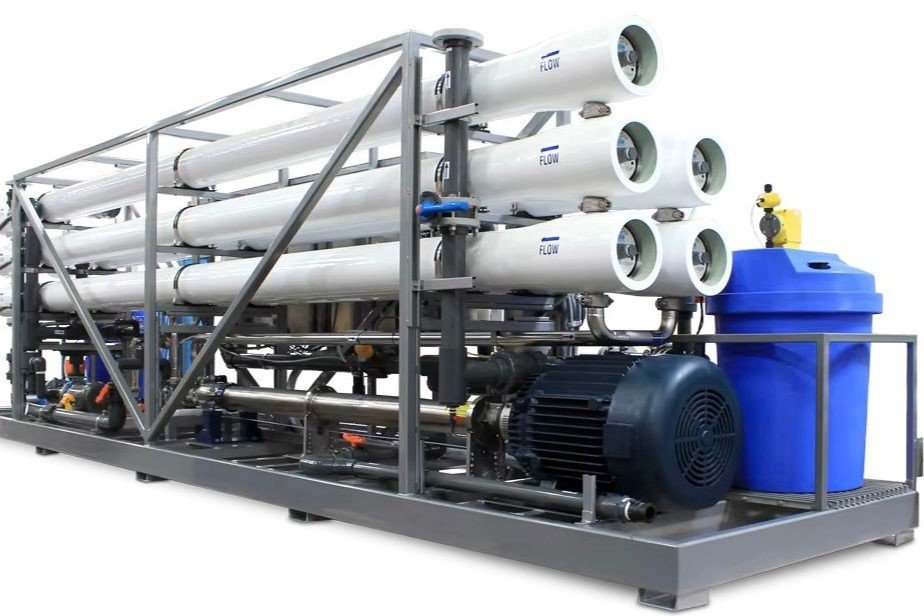
- Reverse Osmosis: Mechanical pressure is applied to an impure solution to force pure water through a semipermeable membrane. Reverse osmosis is theoretically the most thorough method of large scale water purification available, although perfect semi-permeable membranes are difficult to create. Unless membranes are well-maintained, algae and other life forms can colonize the membranes.
- Electrode Ionization: Water is passed between a positive electrode and a negative electrode. Ion selective membranes allow the positive ions to separate from the water toward the negative electrode and the negative ions toward the positive electrode. High purity deionized water results. The water is usually passed through a reverse osmosis unit first to remove non-ionic organic contaminants.
|
Safety and Controversies:
|
 |
There has been controversy over the fluoridation of water since the 1930s, when the benefits to dental health were first identified.
Water supplies have sometimes been the subject of concerns over terrorism or actual terrorist threats.
Accidents have also been known to happen. In April, 2007, the water supply of Spencer, Massachusetts became contaminated with excess sodium hydroxide (lye) when its treatment equipment malfunctioned. |
|
|
© Copyright 2007. All Rights Reserved. |
|
|